THE FUTURE OF WELLNESS IS DATA-DRIVEN, PERSONALISED AND PURPOSEFUL
By Ingo Schweder
January 2026
After attending the 2026 Wellness Destination AI Tech Summit in Singapore, I left with a heightened sense of inspiration and a firm conviction: the future of wellness is no longer defined by aspiration, but by accountability. It is powered by science, designed through data and delivered with deep human sensitivity. Rather than a future vision, it is already here, and it is accelerating.
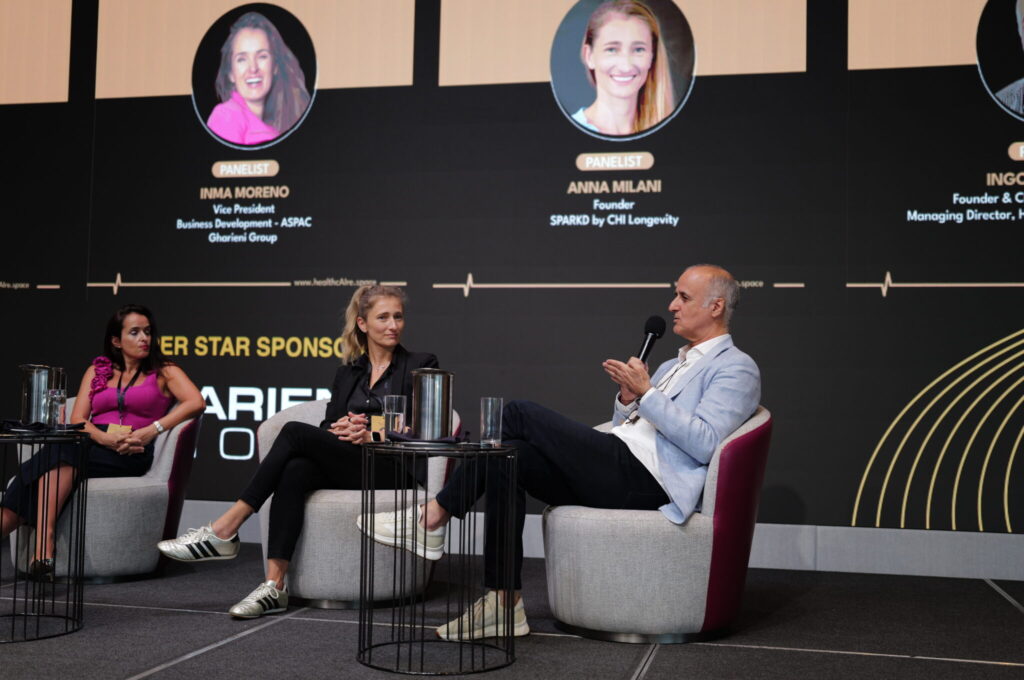 GOCO Hospitality’s Founder & CEO, Ingo Schweder at 2026 Wellness Destination AI Tech Summit in Singapore
Across the summit sessions, one thing was clear: wellness has outgrown its role as an amenity. It has become a strategic force shaping guest journeys, development models and tourism economies alike. The global travel industry is a US$10 trillion ecosystem, and its fastest-growing sectors are now being redefined by longevity science, personalised medicine and AI integration.
Travellers are moving away from linear group itineraries and toward purpose-driven micro-journeys, especially in Asia-Pacific, where relaxation, cultural immersion and health resilience are key motivators. Guests want meaningful impact, not just massages and fruit platters.
What does a guest expect today?
Not a menu of treatments.
Not vague promises of detox or transformation.
They want a personalised roadmap, grounded in biomarker data, lifestyle context and an integrated plan that follows them beyond the property.
One of the most striking presentations at the summit showed the dramatic variability in supplement quality, particularly for NMN and Urolithin A. Products often failed to meet their own label claims, with dosage deviations reaching up to 100%. That is not just embarrassing, it is dangerous.
This is the gap we must close: from marketing fluff to clinical-grade trust.
Here is the real question every hospitality operator must now ask: If you offer supplements, testing, sleep support or longevity menus, can you prove they work?
We must implement rigorous frameworks:
- What is the biological objective?
- Which biomarkers are tracked?
- What is the correct dosage, frequency and protocol?
- How do we validate the outcomes?
This shift will separate serious operators from those still selling snake oil.
Despite the technological dazzle of AI and robotics, the summit repeatedly affirmed one truth: the basics matter most.
- +10 years of life can be gained from dietary change alone
- VO2max and muscle mass are among the strongest predictors of long-term health
- Sleep regularity, not just duration, has a direct impact on mortality risk
At GOCO Hospitality and Fivelements, we see this every day. The simplest programmes, structured movement, breath-led recovery and better sleep rituals often deliver the most profound results.
We must stop glorifying weight loss or short-term detox, and start creating durable, evidence-based rituals that build resilience.
I was especially struck by the sophistication of AI tools being applied in real time across health tourism, diagnostics, guest journey mapping and even retreat design.
AI can now:
- Integrate longitudinal health data
- Generate personalised intervention pathways
- Model guest engagement and attrition risk
- Identify optimal nutrient or fitness prescriptions based on epigenetics
But there is a caveat: AI cannot replace human intuition. It is a co-pilot, not the captain.
Wellness is ultimately about connection, touch, empathy and these must remain at the heart of our delivery models.
The modern wellness traveller is:
- Data-literate
- Privacy-conscious
- Results-oriented
- Community-seeking
They want to know:
- How will this retreat improve my biological age?
- Can I track improvements in cognition, mood and inflammation?
- Will my sleep actually improve, and if so, how do I maintain it?
They expect digital peace, not digital overload. “Ping Minimalism”, a term discussed at the summit, perfectly captures the growing demand for low-tech sanctuaries and intelligent disconnection.
In an era where chronic diseases outpace clinical infrastructure, our destinations have an opportunity and responsibility to become education platforms.
Whether through guided breath, longevity MOTs or gamified fitness tools, the future of retreats is not in preaching, but in translating science into felt experience.
- What does it mean to strengthen your mitochondria?
- Why is leg muscle mass a better predictor of lifespan than weight?
- How does irregular sleep silently age your brain?
If we cannot answer these questions through our programming, we are not ready for what is coming.
As the founder of a global wellness group, I walked away from this summit feeling energised and challenged. The data was powerful. The insights are deeply actionable.
But the takeaway is simple: beautiful spaces are no longer enough.
We must now build destinations that deliver biological transformation.
We must be fluent in both nature and science.
And above all, we must design for longevity with integrity, humility and imagination.