GOCO Wellness Expert Series
How Trauma Speaks Through the Body with Nader Marwani
Nader Marwani is a holistic practitioner specialising in advanced bodywork, functional movement and nervous system regulation. His approach is intuitive and results-driven, focusing on identifying and resolving the root causes of physical pain, structural imbalance and chronic tension.
Working at the intersection of manual therapy, movement and behavioural integration, Nader supports clients in restoring mobility, reducing pain and sustainably reconnecting with their bodies. His work is highly personalised, with no fixed protocols, allowing each session to respond directly to the body’s needs.
He works with a diverse range of clients, from individuals managing long-term discomfort to high-performing athletes seeking recovery, alignment and optimisation.
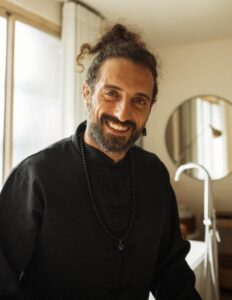 Nader Marwani, Holistic Practitioner
When I first began working with people, I quickly realised something profound: pain is rarely just physical. Behind every frozen shoulder, every tense jaw, every chronic stomach problem, there was often a deeper story, a silent one, the body had been carrying long after the mind had moved on.
Over the years, I have come to understand that trauma is not just a memory stored in the brain. It’s an imprint in the nervous system, in the fascia, in the organs, in the very way we breathe and hold ourselves. Some people come to me with pain that no doctor can fully explain or symptoms that medication only masks. What I have learned is that the body remembers and the body speaks.
The nervous system is our survival headquarters. It governs how we react to stress, danger and even daily life. When trauma strikes, whether a dramatic event like an accident or subtle but chronic stress over years, the system can get stuck.
Instead of returning to a calm, balanced state, the nervous system stays on alert. Muscles tighten, digestion slows, and sleep becomes shallow. This is why someone can feel exhausted yet restless or experience digestive issues with no clear medical cause. Their system is locked in survival mode, unable to switch off.
This is simply biology; it is the body trying to protect itself. But protection over time can become prison. Healing is about reminding the nervous system that it is safe again.
Our fascia, the connective tissue that wraps every muscle and organ, is like a living memory bank. It holds posture, movement and even unexpressed emotions. When someone has lived with grief, fear or anger for a long time, the fascia can become rigid, pulling the body into protective patterns: hunched shoulders, shallow breath, tight hips.
I often see people who have lived through loss or hardship, and their bodies tell me everything before they speak a word. Their chest is closed, their gait cautious, their breath trapped in the upper lungs. Working with the fascia isn’t just about softening tissue; it’s about unlocking stories the body has kept frozen.
The gut-brain connection is one of the clearest examples of how emotions affect the body. Anxiety creates stomach knots. Suppressed anger burdens the liver. People who “swallow their words” often present with thyroid or throat tension.
I once worked with a woman who had lived with severe constipation for years. Doctors prescribed medication, but the issue always returned. Through abdominal work and nervous system regulation, her bowels began to move naturally again, not because I treated her intestines directly, but because her body finally felt safe enough to let go.
This is why I say: symptoms are not enemies, they are messages. They tell us where energy is stuck, where emotion has been left unprocessed, where the body is asking for attention.
People often ask me: “What will happen in a session?” My answer is always: “Whatever your body needs.”
Release doesn’t always look graceful. Some people cry. Others tremble, yawn, cough, laugh or even pass gas. I have seen people suddenly feel dizzy or get the urge to run to the toilet. And some people feel absolutely nothing at all in the moment, only to wake up the next day feeling lighter, calmer or in less pain.

All of it is normal and all is welcome. These are simply the nervous system and tissues completing cycles of stress they never got to finish. Healing isn’t always quiet; sometimes it can manifest messily, but it’s always intelligent.
Somatics, the study of the body as experienced from within, has been one of the most transformative lenses in healing. It teaches us that the body doesn’t lie. A posture, a breath, a tremor: these are all expressions of the inner world.
In my practice, I blend somatic awareness with hands-on techniques:
- Manual alignment and chiropractic-style adjustments to restore structure
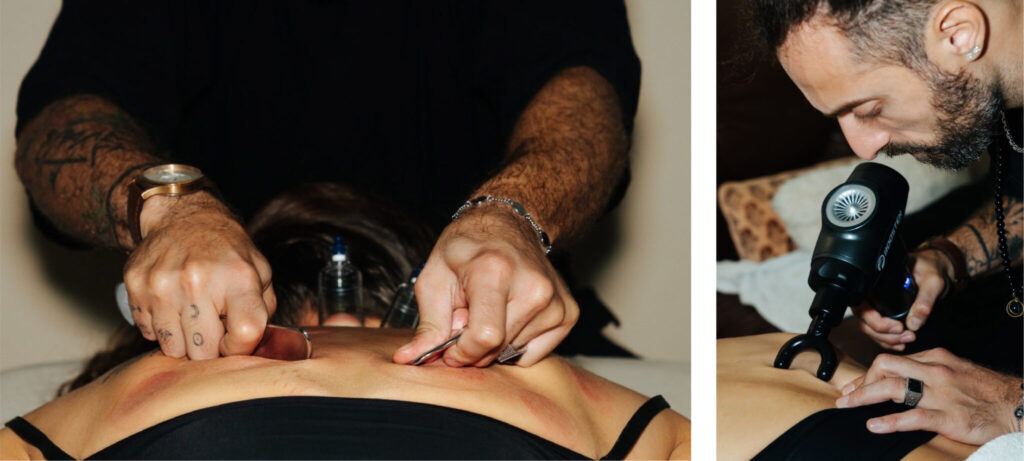
- Myofascial release and deep tissue work to soften long-held tension
- Neuromuscular therapy to reset communication between nerves and muscles
- Ancient techniques from Islamic Traditional Medicine to detoxify and clear stagnant blood and energy
- Acupressure-point therapy to regulate internal balance
The blend is never fixed because each body asks for something different; my role is not to force but to listen.
Case Examples from Practice
- Burn trauma and rigidity: A man with severe burns lived in a body that felt like a cage of scar tissue. Gentle fascia work, nerve release and alignment began to give him back the mobility he thought he had lost forever.
- Grief carried in the back: A client going through a divorce came with chronic lower back pain. As we worked, tears came. The release wasn’t only muscular, it was emotional. Weeks later, he told me he felt freer in her body and his life.
- Abdominal tension and digestion: A young woman with constipation and bloating discovered that abdominal release not only improved her elimination but also lifted a weight of anxiety she had carried for years.
What unites all these cases is that pain was not just physical. It was the body’s language for unspoken stories.
How to Get the Best from a Healing Session
Healing is not passive. It’s a collaboration between client and practitioner. To make the most of it, I encourage people to prepare:
- Set an intention. You don’t need to know exactly what’s wrong, but be open. Maybe it’s letting go of fear or simply wanting clarity. The body listens to the mind.
- Prepare the body. Light, plant-based meals before longer sessions help digestion stay calm. Avoid heavy food or alcohol.
- Wear comfort. Loose clothing allows free movement and breath.
- Allow space after. Schedule quiet time. Many people feel the need to nap, reflect or just be. Healing continues long after you leave the room.
The session itself may feel like a mix of intensity and calm. But the real integration often happens afterwards in your dreams, your digestion, your energy shifts.
One of the most important lessons I learned is that people are not broken. Even in the most painful cases, the body is always trying to protect, always trying to adapt. What feels like dysfunction is often the body’s best attempt to survive.
My role is to create a safe space where the body can finally stop fighting and begin to release. I don’t see myself as the one “doing the healing.” I see myself as a facilitator. The body does the work when it feels it is safe to do so.
Science is catching up with what healers have known for centuries: symptoms are our guides. And if you learn to listen, they will show you the way back to balance.
Healing is a journey, not a quick fix. Some shifts happen in a single session; others unfold slowly over weeks or months. But the principle is always the same: your body knows. Every cough, every tear, every sigh is a step toward release. Every moment of stillness is an act of integration. And every session is a reminder that pain is not the end of the story but the beginning of a new one.
For more details about Nader, please explore his LinkedIn profile here.